Lab Safety First: Sharjah OSH Safety Guidelines 2026 for Acid Handling
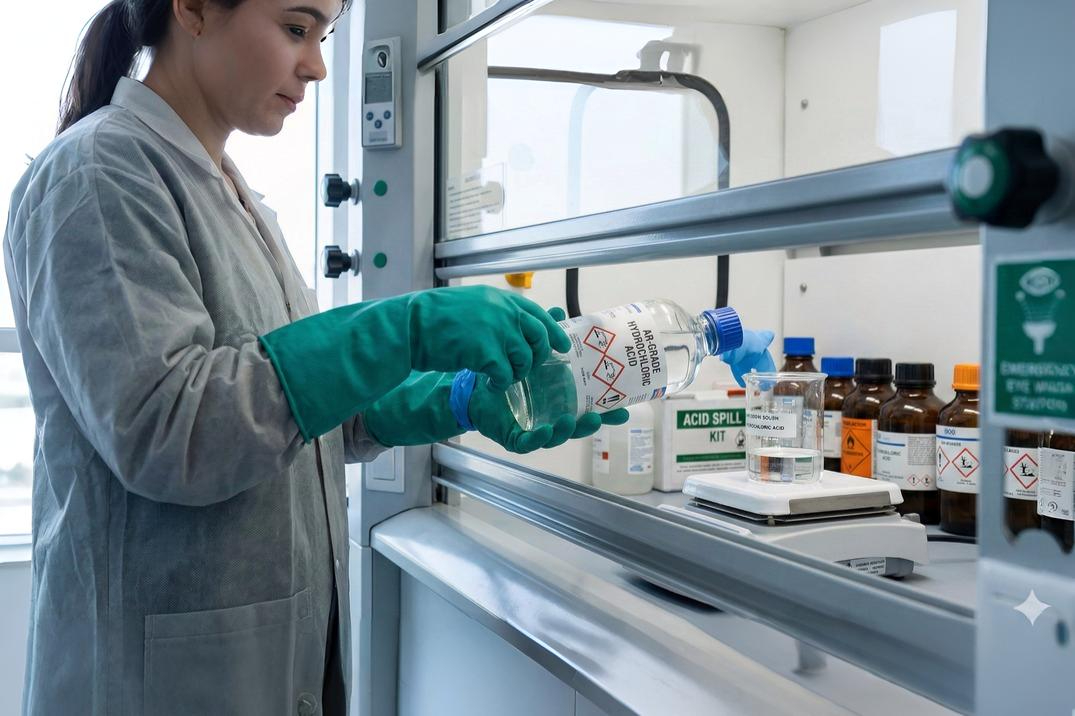
Handling AR-grade (analytical reagent) acids is standard practice in many UAE labs, but the margin for error is zero. These aren’t just “chemicals” they are highly corrosive substances that can cause permanent damage in seconds. If you’re operating in the emirate, staying compliant with the latest Sharjah OSH safety guidelines 2026 is the only way to protect your team and your licence.
The short answer? Safety starts with a specific hierarchy of protection, beginning with certified PPE.
Essential PPE for AR-Grade Acid Handling
When you’re dealing with concentrated acids like hydrochloric or sulfuric, a standard cotton lab coat isn’t enough. You need barriers that actually repel liquids rather than absorbing them.
➤
Chemical-Resistant Lab Coats: Look for lab coats treated with a fluid-resistant finish or made from synthetic blends. For high-volume transfers, a chemical-resistant apron over your coat is a non-negotiable layer of safety.
➤
Acid-Proof Gloves: Not all blue gloves are equal. For AR-grade acids, thick nitrile or neoprene gloves are required. Many labs are now moving toward double-gloving—wearing a thin nitrile pair under a heavier acid-resistant glove for added security during high-risk tasks.
➤
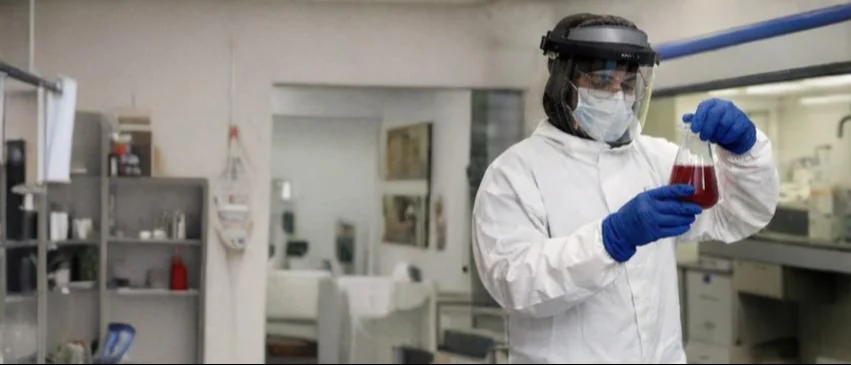
Eye and Face Protection: Safety glasses protect from the front, but splash goggles provide a 360-degree seal around the eyes. If you’re pouring acids at eye level, a full face shield is essential to prevent facial burns from accidental splashes.
Why the 2026 Guidelines Focus on Traceability
The updated Sharjah OSH safety guidelines 2026 emphasize “traceability and fit.” It’s no longer enough to just have gloves in a box. The Sharjah Prevention and Safety Authority (SPSA) now looks for documentation proving that your PPE meets international standards like EN 374 (for chemical protection) or ANSI Z87.1 (for eye safety).
At Saffron Chemicals, we ensure every piece of safety gear we supply is batch-tested and fully compliant with these 2026 standards. This isn’t just about passing an inspection; it’s about knowing that when a drop of acid hits your glove, the material will hold long enough for you to safely reach a wash station.
Engineering Controls: The Partner to Your PPE
PPE is your last line of defence, but it shouldn’t be your first. Under the current UAE safety framework, you must use engineering controls to minimize the risk before a single glove is even put on.
Always handle AR-grade acids inside a certified fume hood with a sash height of 18 inches or less. This keeps corrosive vapours away from your respiratory system. Furthermore, ensure your lab has an emergency eyewash station and a safety shower within a ten-second walking distance (roughly 55 feet). In the heat of the UAE, maintaining these stations with temperate, clean water is a key part of your 2026 compliance checklist.
Emergency Response and Acid Spill Kits
Spills happen even in the most careful labs. A dedicated acid spill kit should be stationed wherever hazardous chemicals are stored or used. These kits must include neutralizers (like sodium bicarbonate for acids) rather than just absorbent pads.
A “human-first” safety culture means every staff member knows exactly where that kit is and how to use it. Under the new Sharjah OSH framework, periodic training and record-keeping of these drills are now mandatory for all high-risk laboratory environments.
Final Thoughts on Sharjah OSH Safety Guidelines 2026
Acid safety isn’t something you can “set and forget.” It requires high-quality gear, constant vigilance, and a commitment to the latest local regulations. Are your current safety protocols up to the 2026 Sharjah standards?
FAQ
If you’re just moving a closed bottle, goggles are fine. But if you’re pouring or mixing AR-grade acids? Yes, wear the shield. Goggles protect your eyes, but the shield protects your skin from a splash that can leave permanent scarring.
Check the packaging for the chemical resistance pictogram (the Erlenmeyer flask icon). It should have a code underneath it. For acids, you usually want to see codes like ‘K’ (sodium hydroxide) or ‘L’ (sulfuric acid). If you’re not sure, ask your supplier for the permeation chart.
For water and salt solutions, yes. For acids? No. Standard cotton absorbs acid and holds it against your skin. You need a treated, fluid-resistant lab coat or a PVC/rubber apron for real protection.
It means you must be able to reach a working eyewash station within 10 seconds of an accident. If you have to go through a door or move an obstacle, you’re failing the safety check.
No. Using a “universal” kit on a strong acid can sometimes cause a reaction. You need a kit that specifically contains neutralizing agents to stabilize the pH of the acid before you try to soak it up.