

Why Your Analytical Balance Won’t Settle
A reading that creeps up by a digit with the doors shut is a familiar sight at any weighing bench. When an analytical balance refuses to settle, the cause is usually air movement, static charge, a temperature gap between sample and chamber, or a bench that is out of level. Each leaves a different fingerprint on the display. Learn the patterns, and most faults take a few minutes to trace.
Why Does Analytical Balance Keep Drifting?
An electronic balance does not read mass directly. It senses the force a sample puts on the pan and converts that into a number, so anything that pushes, pulls, or lifts the pan registers as weight. With a readability of 0.1 mg or finer, the weighing chamber becomes a sensitive detector for disturbances nobody would notice on a kitchen scale.
Laboratories rely on measurement accuracy and consistent testing, which is why a precision balance sits among the common instruments next to pH meters, hot plates, and magnetic stirrers.
Drafts and Air Movement
Start here, because air is the cheapest suspect to rule out. Slow airflow pushes on the pan and the sample, and the display wanders in small, random steps instead of sliding one way. Close every draft shield door fully before reading, then look at what surrounds the bench. A ceiling vent, a door that opens into the room, a fume hood pulling air nearby, or a colleague walking past will all show up in the number. In UAE labs, where cooling runs through much of the year, a vent aimed across the bench is an easy mistake. Redirect the airflow or move the balance before adjusting anything else, and read up on good weighing practice through the NIST Office of Weights and Measures if you want a standards-based reference.
Static Charge on Dry Days
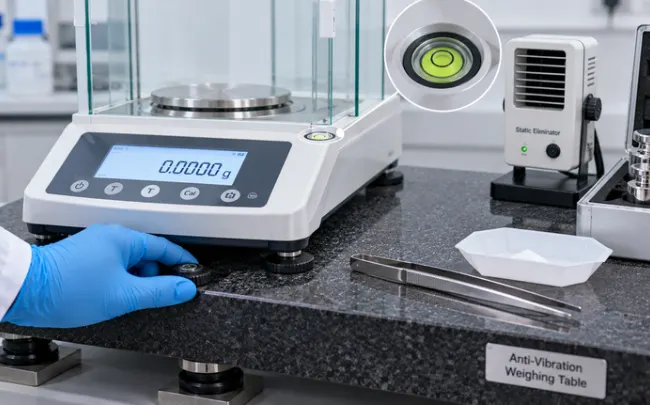
Static looks different. Rather than jitter, you get a steady slide in one direction or a number that jumps when your hand comes near the chamber. Plastic weighing boats, glass vessels, fine powders, and the dry air of a heavily cooled room all build charge. A static eliminator beside the chamber, a metal or antistatic boat, and forceps in place of rubbing the vessel with a gloved hand usually calm it. Many manufacturers also recommend a moderate humidity range for the room, so check the manual for the figures that apply to your model.
Temperature Differences and Warm-Up
Warm samples are the classic trap. A crucible straight from the oven heats the air around the pan and creates a small upward current, so the reading sinks slowly as the sample cools. A cold sample from the fridge does the reverse. Let samples reach room temperature, ideally in a desiccator beside the balance, and lift them with tongs so your fingers add no heat.
The instrument needs time too. After power-up, internal parts settle thermally, and most manuals set out a warm-up period before the display can be trusted. Direct sunlight on the bench, or a hot plate running a meter away, can undo that settling.
Leveling, Vibration, and the Bench
Check the bubble level every time the balance is moved or the bench is knocked. Turn the leveling feet until the bubble sits in the center of the ring. A tilted balance reads differently as the load shifts across the pan, which is why one weight can give slightly different numbers in different positions.
The surface matters just as much. A heavy, rigid bench or a dedicated weighing table keeps vibration out. A centrifuge, a shaker, or a corridor floor that carries foot traffic does the opposite. Labs planning a new weighing station can ask laboratory equipment suppliers in UAE for the manufacturer’s site requirements on bench, airflow, and temperature before installation. After leveling, run the adjustment routine in the manual, using certified weights where it calls for them.
A Quick Order of Checks
Match the symptom to the likely cause. Random jitter points to drafts or vibration. A smooth slide in one direction suggests temperature or static. Different results for the same weight in different pan positions point to leveling. If an analytical balance settles briefly and then wanders, work through air, temperature, static, and level in that order. Clean the pan and the space under it as well, since spilled powder adds weight and can foul the movement. If the fault survives every check, stop adjusting and bring in the manufacturer or a qualified metrology technician.
Final Thoughts
Settling problems usually trace back to the room around the instrument, and each cause can be tested in minutes. Where results feed clinical, pharmaceutical, or safety decisions, follow your laboratory’s procedures and the manufacturer’s manual, and leave calibration to qualified personnel. This article offers general information, not a replacement for either. Labs in the UAE reviewing their bench setups can see weighing balances listed with centrifuges, hot plates, and magnetic stirrers in the medical and laboratory equipment categories at Saffron Chemicals, a Sharjah-based supplier.
Which of the four causes will you rule out first on your own bench tomorrow morning?
FAQ
Usually it’s air, static, temperature, or a bench that isn’t level. Close the doors, let the sample reach room temperature, and check the bubble level. “Jitter” means drafts or vibration. A steady slide means heat or static.
Check the manual, because it varies by model. Most instruments need some powered-on time before the display settles, so leave the balance on and let it reach a steady temperature.
Yes. Charge on a plastic boat or dry glass pulls on the pan, so the display drifts or jumps. A static eliminator, a metal boat, and forceps usually calm it down.
It does. Use a rigid bench away from vents, doors, sunlight, centrifuges, and hot plates. Those add airflow, heat, and vibration.