

Water Testing Chemicals UAE: A Complete Lab Reagent Guide
Every glass of tap water in the UAE has been checked, rechecked, and checked again before it reaches a household. Behind that process sits a quiet workhorse: the reagents and standard solutions that let a lab actually see what’s in the water. Get the chemistry wrong, and the results are wrong too, no matter how good the equipment is. This guide walks through the water testing chemicals UAE laboratories depend on, what each category does, and why sourcing them properly isn’t something to shortcut.
Why Does Water Quality Testing Matter in the UAE?
The UAE leans heavily on desalinated water, groundwater, and treated wastewater, and each source carries its own risks. Desalinated water can pick up mineral imbalances during processing. Groundwater in parts of the Gulf region often runs high in salinity and hardness. Treated wastewater used for irrigation needs constant monitoring for pathogens and heavy metals. This is where water quality testing reagents come in. Without accurate reagents, a lab can’t confirm whether chlorine levels are safe, whether nitrate has crept above WHO thresholds, or whether a batch of water meets the standard it’s supposed to meet.
The Core Water Testing Chemicals UAE Laboratories Rely On
Most water analysis work in the region comes down to a handful of reagent families, each tied to a specific parameter.
pH and Alkalinity Reagents
pH buffer solutions, usually at 4.01, 7.01, and 10.01, calibrate meters before any reading is trusted. Alkalinity is then measured using titration reagents like sulfuric acid and phenolphthalein or methyl orange indicators, which show how well water can resist sudden pH swings.
Chlorine and Disinfection Testing
Ask any water treatment operator in Dubai or Sharjah what gets checked first, and chlorine usually comes up. DPD, short for N,N-diethyl-p-phenylenediamine, is the reagent that makes this possible, giving labs a way to measure both free and total chlorine in a sample. This isn’t optional for municipal systems or hotels running their own water treatment. Run chlorine too low and bacteria get room to grow. Push it too high and guests start noticing the taste, sometimes within a single shift.
Nutrient, Metal, and Ion Testing
Nitrate and phosphate reagents tend to matter most where agricultural runoff or poorly treated wastewater feeds into a water source, since both nutrients spike well before anything looks visibly wrong. Ammonia reagents catch a similar problem earlier. Heavy metal test kits do different work entirely. Labs pull these out for older buildings with aging plumbing, or industrial sites where lead, iron, and arsenic contamination is a genuine risk rather than a formality. A facility built in the 1990s and one built last year need very different testing priorities here.
TDS, Conductivity, and Standard Solutions
Meters drift. That’s just how it works, which is why calibration standards for TDS and conductivity exist in the first place. A conductivity probe that hasn’t been recalibrated in months can report numbers that look fine but aren’t. What trips up a lot of labs is forgetting that the calibration solution itself has a shelf life. A standard solution sitting open on a shelf for half a year won’t calibrate anything accurately, no matter how careful the technician is.
Grade matters more than price when sourcing water testing chemicals UAE labs plan to rely on for actual reporting. AR grade reagents go through tighter purity screening than technical grade versions, and that difference shows up directly in how much you can trust the final number.
Choosing Quality Reagents for Accurate Results
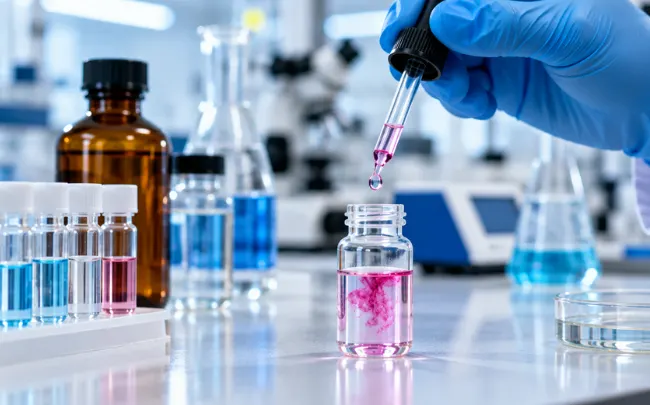
A reagent’s label tells part of the story, but a Certificate of Analysis tells the rest. Labs working across hospitality, industrial, and municipal sectors in the UAE should ask suppliers for batch-specific documentation, not just a general product spec sheet. Saffron Chemicals, for instance, positions its laboratory chemicals catalog around AR, LR, and HPLC-grade fine chemicals built for research and diagnostic accuracy, alongside standard solutions and inorganic reagents used across these testing categories.
Consistency between batches is just as important as purity within one batch. A reagent that performs differently from bottle to bottle throws off trend data, which matters a great deal for facilities tracking water quality over months or years.
Storage, Safety, and Compliance
Laboratory chemicals are sensitive to heat, light, and moisture, and water testing reagents are no exception. Most should sit away from direct sunlight, be dated on arrival and again when opened, and be checked against expiry before use in any reportable test. Safety Data Sheets should travel with every order, since several water testing reagents (chlorine reagents and strong acids used in titration, for example) require specific handling and disposal steps under UAE environmental regulations.
Facilities operating under ISO or municipal compliance frameworks should also confirm that their supplier’s quality control process includes purity, stability, and performance testing before chemicals leave the warehouse, not just a final inspection.
Final Thoughts
Accurate water testing isn’t just a lab formality in the UAE; it’s part of protecting public health and industrial performance in a region where water sources carry real variability. The reagents themselves rarely get attention, but they’re doing the actual work behind every result a lab reports. What does your current testing setup look like, and is your reagent sourcing keeping pace with your testing volume?
FAQ
Depends on what you’re reporting. If results go into a compliance report or get shared with a client, AR grade is worth the extra cost because the purity variance is tighter. For rough internal checks, technical grade might be fine, but don’t mix the two in the same dataset.
DPD reagents degrade faster than people expect, especially once opened. Most labs rotate stock every few months rather than waiting for a hard expiry date, since a slightly degraded reagent can quietly skew chlorine readings without any obvious sign.
Leaving them near windows or heat sources. It sounds obvious, but reagent bottles sitting on a sunny shelf for even a few weeks can lose potency well before their printed expiry date.
Usually one supplier works fine if their catalog actually spans those categories rather than just listing them on a webpage. One thing worth checking before you consolidate everything: ask for a Certificate of Analysis on the categories you order less often, not just your usual pH buffers or chlorine reagents. That’s where quality control tends to slip.
Because the UAE blends desalinated, groundwater and treated wastewater sources, each with different risk profiles. A testing program built around just one source type will miss problems specific to the others.