
A Beginner’s Guide to Basic Lab Equipment
Basic Laboratory Equipment: What It Is and How It’s Used
Walk into any lab and you’ll see shelves of glass in odd shapes. Some of it looks almost the same. But a beaker and a volumetric flask aren’t interchangeable, and mixing them up is one of the easiest ways to get a bad result.
This guide covers the basic equipment you’ll find in most labs, what each piece does, and how to pick the right ones.
Types of Basic Laboratory Equipment and Their Uses
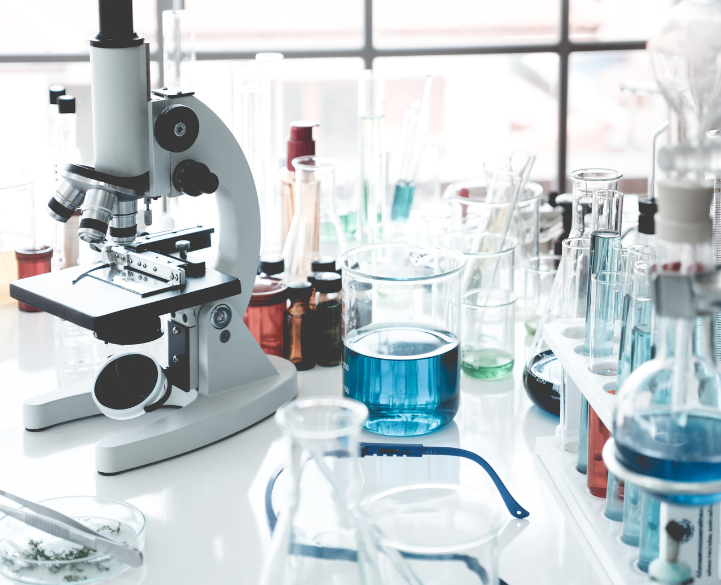
- Beakers are the workhorses. They’re wide, flat-bottomed and have a small spout for pouring. You use them to mix, heat and hold liquids. The printed markings are only rough. If you need an exact volume, a beaker won’t give you one.
- Flasks come in a few kinds. The conical (Erlenmeyer) flask has a narrow neck, so you can swirl a solution without it splashing out. That makes it a favourite for titrations. The volumetric flask is different. It holds one exact volume, shown by a single line on the neck, and you use it to prepare solutions of a known concentration.
- Graduated cylinders sit between the two. They’re tall and narrow, and they measure liquid volume more accurately than a beaker can.
- Pipettes move small amounts of liquid from one place to another. A volumetric pipette delivers one fixed volume. A graduated pipette has markings so you can draw off different amounts. Micropipettes handle tiny volumes, often just microlitres, which is common in biology and testing labs.
- Burettes are long, thin tubes with a tap at the bottom. You use them in titrations to add a liquid drop by drop and read exactly how much went in. Steady hands help. So does a white tile under the flask so you can see the colour change.
- Thermometers track temperature during heating, reactions and storage. Glass ones are still common in teaching labs. Digital probes are easier to read and respond faster.
You’ll also use test tubes, funnels, watch glasses, stirring rods and balances almost every day. If you’re stocking up, browse our range of laboratory glassware to see how these pieces compare in size and material.
How to Choose Laboratory Equipment for Your Needs
Start with one question: how exact does this measurement need to be?
If you’re only mixing or storing, a beaker is fine. If you’re making a standard solution, you need a volumetric flask. Same glass-looking tool, very different job.
A few other things matter:
- Material. Borosilicate glass handles heat and most chemicals well. Plastic is cheaper and harder to break, which suits some teaching settings, but it won’t survive every solvent or every flame.
- Accuracy grade. Class A glassware has tighter tolerances than Class B. It costs more, and it’s worth it when results get reported or audited.
- Volume. Buy the size you’ll actually use. A 1-litre beaker for 20 ml of liquid makes for sloppy reading.
Quantity and budget. Glass breaks. Plan for replacements.
If you’d rather see everything in one place, our laboratory equipment and scientific supplies category is a good starting point.
Essential Laboratory Safety Equipment
Good equipment doesn’t help if people aren’t protected while using it. Every lab needs a basic set:
- Safety goggles
- Gloves suited to the chemicals in use
- Lab coats
- A fume hood or good ventilation
- An eyewash station and first aid kit
- A fire extinguisher, with staff who know where it is
That last one is easy to overlook. People notice the extinguisher on the wall. They don’t always know how to use it. Do a quick walkthrough with new staff or students on day one.
You can find the essentials in our laboratory safety products range.
Laboratory Equipment for Schools and Research Facilities
A school lab and a research lab need different things, even when the shopping list looks similar.
Schools tend to need durable, forgiving equipment in larger numbers. Think plastic alternatives where they’re safe to use, sturdy glass for heated work, and simple tools students can handle without fuss. Safety gear matters even more here, because beginners make beginner mistakes.
Research facilities care more about precision. That means Class A glassware, calibrated instruments, and documentation to back up the numbers. A burette that reads slightly off can quietly skew a whole set of results.
Either way, ask what the lab will actually do week to week, then buy for that.
Where to Find Laboratory Equipment in the UAE
When you’re sourcing equipment in the UAE, check a few practical things before you order. Is the item in stock locally? Is the glassware properly graded? Can the supplier help if you’re unsure what to pick? A quick question before buying beats a wrong order you have to return.
Saffron Chemicals supplies laboratory equipment and scientific supplies to labs across the region. If you’re not sure where to start, get in touch through the Saffron Chemicals homepage and tell us what the lab needs to do. We’ll point you to the right items.