
Volumetric Glassware Calibration: What UAE Labs Get Wrong
Volumetric glassware calibration decides whether a titration result means anything at all. A flask marked five hundred millilitres that actually holds four hundred and ninety-eight carries that error into every dilution built on top of it. Most labs catch a broken pH meter within a week. Glassware drift can run for months, because glass never looks wrong even when it measures wrong.
Why Does Volumetric Glassware Calibration Get Skipped?
ISO 4787 calibration sets out the gravimetric method labs are supposed to use: weigh the water a flask or pipette holds, correct for temperature and buoyancy, and compare the result against the stated tolerance. In practice, many UAE labs treat calibration as something done once at purchase and never again.Glassware accuracy depends on three things working together. Material quality keeps the glass from expanding unpredictably under heat. Calibration confirms the marked volume actually matches reality. Maintenance, meaning regular cleaning and careful handling, stops residue and chips from throwing off readings. Skip any one of the three and results start drifting quietly.
Boro 3.3 Glass and Why the Standard Behind It Matters
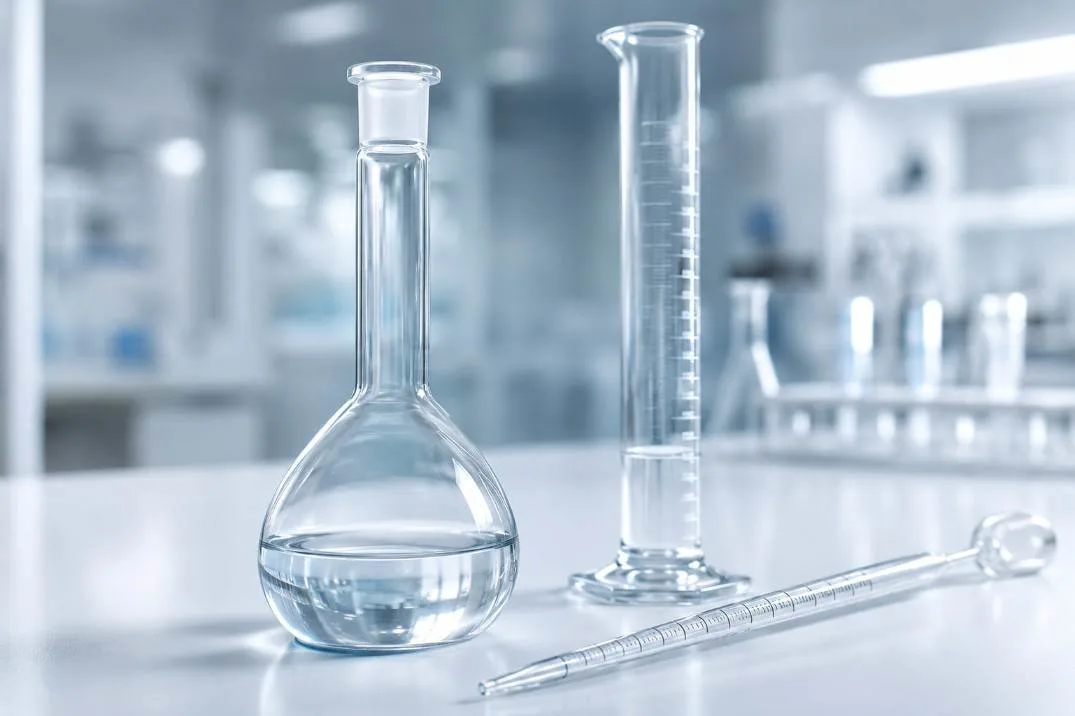
Not all glassware is built to the same tolerance. Laboratory-grade volumetric flasks, pipettes, and cylinders are typically manufactured from low-expansion Boro 3.3 glass that meets ISO 3585 and ASTM E-438 TYPE 1 CLASS A specifications. That distinction matters more than it sounds. Borosilicate glass resists thermal shock and stays chemically inert, so it does not react with the reagents it holds or warp under a sudden temperature swing. A flask made from a lower grade of glass can pass a visual check and still fail a gravimetric one, which is exactly why the manufacturing standard behind a piece of glassware deserves as much attention as the calibration certificate that comes with it.
This matters across a wider range of settings than most people assume. Hospital labs running diagnostic assays, food and beverage testing facilities, university research departments, and oil and gas laboratories all depend on the same handful of instruments: volumetric flasks, graduated cylinders, burettes, and pipettes. A calibration gap in a hospital lab affects patient results. The same gap in a food testing lab affects a compliance report. The instrument is identical. The consequence is not.
Volumetric Glassware Calibration Mistakes UAE Labs Repeat
A handful of errors show up again and again during audits and internal reviews.
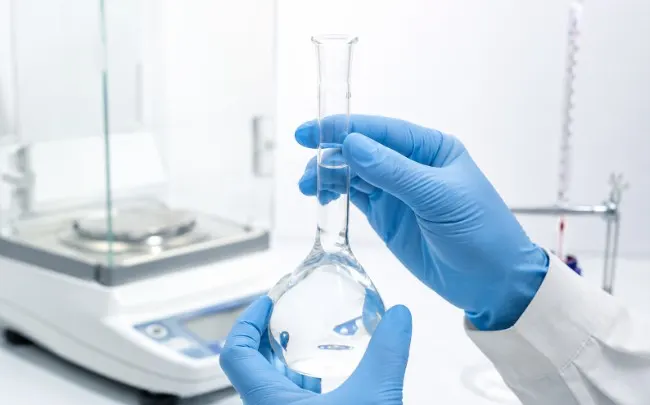
Reading the meniscus at eye level sounds basic, yet technicians under time pressure often read it from above or below, which alone can shift a result by a noticeable margin. Temperature correction gets ignored almost as often. Water volume changes with temperature, and a lab running its calibration at a different ambient temperature than the one stated on the standard will end up with numbers that look fine but are not.
Mixing tolerance classes is another quiet problem. Class A and Class B glassware carry different accuracy limits, and using them interchangeably in a validated method undermines the whole point of calibration. Some labs also skip gravimetric verification entirely and rely only on the manufacturer’s stated tolerance, which tells you what the glassware should do, not what it is actually doing after months of use, cleaning cycles, and handling.
Finally, calibration records go stale. A flask calibrated two years ago and never rechecked is a liability in any audit, particularly in food, pharmaceutical, or hospital laboratories where traceability gets scrutinised.
Cleaning habits deserve a mention too. Detergent film left on the inner wall of a flask changes how water beads and drains, which throws off a gravimetric reading before the calibration process even starts. Rinsing with distilled water and letting glassware air dry, rather than wiping it with a cloth that can leave fibres or residue, is a small step that gets skipped more often than labs would like to admit.
Glass or Plastic: Calibration Behaves Differently
Heat is where the choice gets made. A reaction that generates its own warmth, or a reagent that reacts with plastic polymers over time, pushes a lab toward borosilicate glass almost automatically. Plastic labware gives something up in return for that trade. Polypropylene flasks flex under pressure and can absorb trace amounts of certain solvents, which glass simply does not do.
That is not a knock against plastic. A field team running water samples outside a controlled lab environment cares more about a flask surviving a drop than shaving off a fraction of a percent in accuracy. Teaching labs make the same trade for the same reason. Breakage costs money and time; plastic solves that problem well.
The calibration method does not change based on the material, though. Whether the piece is glass or polypropylene, the same rule applies: check it against a known reference, account for temperature, and treat the printed number on the side as a starting point rather than a fact.
Final Thoughts
Volumetric glassware calibration is not a one-time checkbox. It is a recurring discipline that protects every result built on top of it, from a routine water test to a pharmaceutical assay. Saffron Chemicals supplies the Boro 3.3 glassware referenced throughout this piece, built to the ISO 3585 and ASTM E-438 TYPE 1 CLASS A specifications discussed above. Labs that build calibration schedules around ISO 4787-2021 and pair them with properly graded borosilicate laboratory glassware tend to catch drift before it reaches a client report. When was the last time your lab actually gravimetrically verified its volumetric flasks, rather than trusting the label?
FAQ
There is no single answer, but most working labs check high-use pieces every six to twelve months. Frequency depends on how often the glassware gets handled, cleaned, and moved between benches. Heavy daily use wears tolerances faster than occasional analytical work.
In-house gravimetric calibration is possible if you have a balance with the right resolution and a controlled ambient temperature. Many labs still send Class A glassware out for certified calibration when results feed into accredited reports, since traceability matters more than convenience there.
Water expands and contracts with temperature, and glass does too, just far less. A calibration done at twenty degrees will not hold at thirty. Most standards reference twenty degrees Celsius as the baseline, so results collected outside that range need a correction factor applied before they mean anything.
Not typically for volumetric work. Plastic flexes slightly and can absorb some liquids, which glass does not. Where plastic wins is durability and safety around fieldwork or teaching settings. For precision measurement under controlled conditions, borosilicate glass remains the more stable option.
Class A carries a tighter tolerance and usually comes with an individual certificate. Class B is cheaper and fine for routine, non-critical work. Problems start when a lab uses Class B glassware in a method validated for Class A tolerances without noticing the mismatch.