
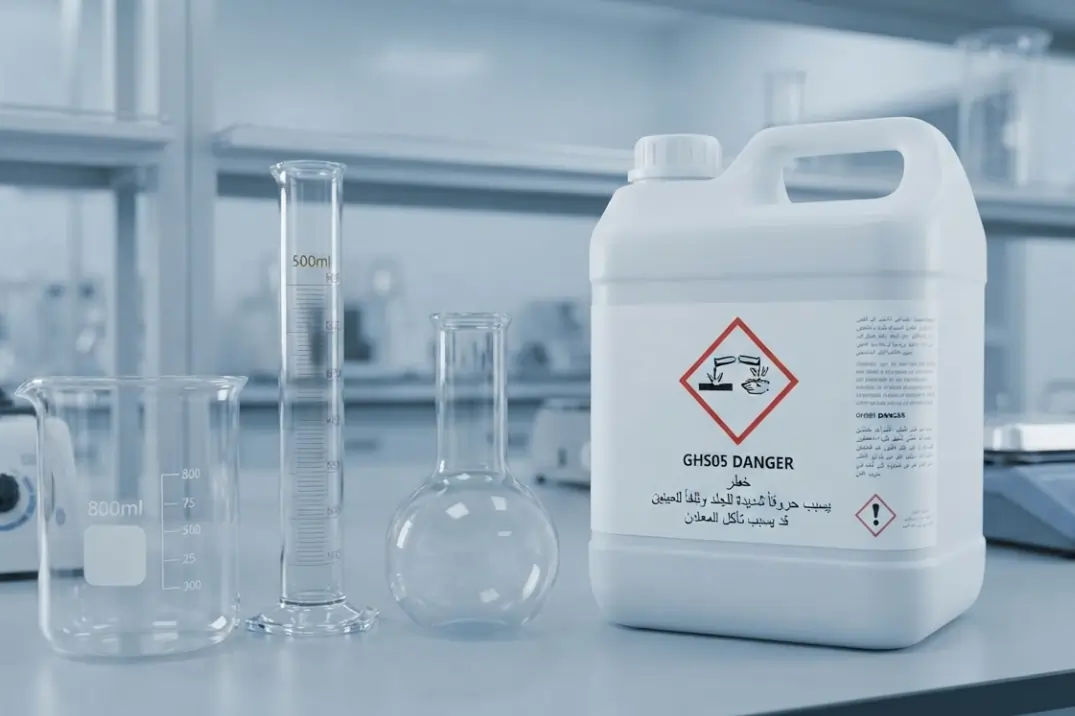
GHS Chemical Labeling Compliance Guide for UAE Facilities
A drum of sodium hydroxide sits in a Sharjah warehouse with a faded label. Nobody can read the hazard class anymore. This is the exact situation GHS chemical labeling exists to prevent, and in the UAE, getting it wrong isn’t just a paperwork problem. It can shut down an audit, delay a shipment at customs, or put a worker in the hospital.
The Globally Harmonized System of Classification and Labelling of Chemicals, or GHS, is the framework the UAE has adopted to standardize how hazardous substances are classified, labeled, and documented. If your facility handles laboratory chemicals, such as reagents, industrial solvents, or bulk chemicals anywhere in Dubai, Sharjah, Abu Dhabi, or the Northern Emirates, GHS compliance isn’t optional. It’s tied directly to how the Ministry of Industry and Advanced Technology and municipal authorities inspect and license chemical-handling operations.
GHS Chemical Labeling: How Classification Actually Work?
GHS classification sorts substances by the type and severity of hazard they pose: physical hazards like flammability and corrosivity, health hazards like toxicity and carcinogenicity, and environmental hazards tied to aquatic toxicity. Each class carries its own pictogram, signal word, and set of hazard statements. A bottle of concentrated nitric acid, for instance, needs a corrosion pictogram and the signal word “Danger,” while a milder solvent might only warrant “Warning.”
The classification isn’t cosmetic. It determines how a substance gets stored, who is allowed to handle it without additional training, and what protective equipment is mandatory nearby. Get the class wrong, and every downstream safety decision built on that label is wrong too.
The Label Itself
A compliant GHS label includes six required elements: the pictogram, signal word, hazard statements, precautionary statements, product identifier, and supplier information. UAE regulators expect these in both Arabic and English on most commercial and industrial shipments, which catches out a lot of importers who assume an English-only label from an overseas manufacturer will pass inspection here.
Labels also need to survive the environment they’re stored in. Gulf warehouse temperatures routinely climb past 45°C in summer, and cheap adhesive labels degrade fast under that kind of heat. A label that peels or fades within a year isn’t just untidy. It’s a compliance failure waiting to be discovered during an inspection.
Classification Data and the Safety Data Sheet Connection
Every GHS-labeled chemical should be backed by a Safety Data Sheet, or SDS, that expands on what the label summarizes. The SDS covers sixteen standardized sections, from first aid measures to disposal considerations, and it’s the document an emergency responder or auditor will actually pull first. Chemical suppliers typically provide these alongside the shipment, and facilities are expected to keep them accessible, not filed away in a folder nobody opens.
According to the Globally Harmonized System documentation maintained by the United Nations Economic Commission for Europe, GHS establishes classification criteria for health, physical, and environmental hazards, along with hazard communication elements including labels and safety data sheets. That structure is what gives the UAE system its consistency with international suppliers, since a chemical classified correctly in Germany or India should carry equivalent hazard information here.
Common Mistakes UAE Facilities Make
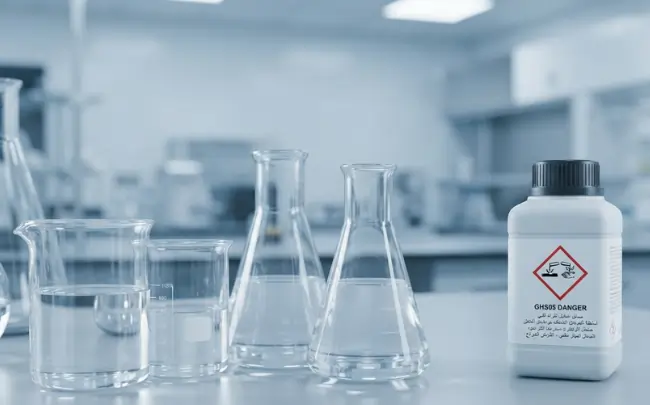
The recurring failure isn’t ignorance of GHS. It’s inconsistent. A facility might label chemicals correctly at intake, then repackage smaller quantities into secondary containers without transferring the hazard information. That secondary container, sitting on a bench with no label, is where most incidents actually happen.
Another common gap is outdated pictograms. GHS has gone through several revisions, and older stock sometimes still carries superseded symbols. Auditors checking against the current revision will flag this immediately, even if the chemical itself hasn’t changed.
Storage segregation is the third recurring issue. Oxidizers stored next to flammables because nobody cross-referenced the hazard classes on the labels is a preventable problem that shows up more often than it should, particularly in facilities juggling both laboratory and industrial chemical inventories.
Building a Practical Compliance Routine
Most facilities that stay compliant do three things consistently. They audit labels on a fixed schedule rather than waiting for an inspection notice. Solid GHS chemical labeling isn’t a one-time task done at intake; it’s a routine that gets revisited every time stock moves or a supplier updates a formulation. They train staff to recognize when a secondary container needs its own label, not just the master drum. And they keep SDS documentation current every time a supplier reclassifies a product.
Working with a supplier that provides accurate documentation alongside every chemical order removes a lot of this burden before it starts. Saffron Chemicals, a chemical company in the UAE, supplies laboratory and industrial chemicals along with the technical data sheets and safety documentation facilities needed to keep their labeling current from the point of delivery.
Final Thoughts
GHS labeling in the UAE sits at the intersection of workplace safety and regulatory compliance, and neither side forgives shortcuts. The facilities that handle it well treat labels as living documents that get checked, not stickers that get applied once and forgotten. Is your current chemical inventory labeled to the revision your last audit actually checked against?
FAQ
You treat it as unidentified until proven otherwise, which usually means quarantining it and cross-checking against purchase records or the SDS on file. Never guess based on color or smell. If there’s no paper trail, some facilities have to arrange third-party testing before it can be used or disposed of safely.
Yes, if the contents leave the original packaging for more than a shift’s use. A workplace label with the product name, hazard pictogram, and basic precaution is the minimum. Skipping this is one of the most common violations inspectors catch in UAE labs and workshops.
A quarterly visual check catches most degradation before it becomes a problem, especially in warehouses without climate control. Heat and UV exposure fade adhesive labels faster than most people expect, sometimes within eight to ten months in direct sun.
Mostly, yes. But the exact requirement shifts depending on which emirate you’re in and what category the chemical falls under. A drum heading into a Dubai industrial zone might face different documentation checks than the same drum going into a Sharjah lab. Call the relevant municipal authority before the shipment lands, not after customs flags it.
Two different jobs, same label. The pictogram does the fast work: a flame, a skull, a corrosion symbol that registers in half a second, even from across a room. The hazard statement slows things down and spells out what that symbol actually means, something like causing severe skin burns and eye damage. Neither one covers for the other. A label missing either piece is incomplete, even if it looks compliant at a glance.