
5 Questions to Ask Hospital Laboratory Equipment Suppliers
A biochemistry analyzer sitting idle for three weeks because a spare part got stuck in customs tells you more about a supplier than any glossy catalogue ever could. For hospitals and diagnostic centers across the UAE, choosing among hospital laboratory equipment suppliers is rarely just about comparing price lists. It comes down to whether machines arrive calibrated and ready to use, whether a technician answers the phone on a Friday afternoon, and whether the same company will still be around when a warranty claim needs honoring years later.
Dubai and Sharjah host a dense cluster of diagnostic centers, private hospitals, and research institutes, and most source equipment from a handful of established suppliers rather than importing directly. That makes the vetting process worth doing properly. Here are five questions worth asking before signing a purchase order.
Table of Contents:
What Questions Should You Ask Before Buying Hospital Laboratory Equipment?
Before choosing among hospital laboratory equipment suppliers in the UAE, ask about product certification, the depth of their diagnostic and analytical range, what after-sales support actually covers, whether they handle custom lab setups, and how reliable their delivery network is across the Emirates. A supplier who answers all five without hesitation is usually one worth working with long-term.
Do Hospital Laboratory Equipment Suppliers Carry Certified, Traceable Products?
Certification is the first thing to check, and it’s also the easiest to overlook when a quote looks attractive. Ask whether the supplier’s catalogue includes ISO-certified lab equipment and whether that certification covers the supplier’s own operations, not just the manufacturers whose products they distribute. A supplier sourcing from well-established manufacturers’ and running products through quality testing against international standards is signaling something concrete: that the equipment reaching your bench has a documented history, not just a warranty sticker. For additional guidance on internationally recognized medical device quality assurance practices, refer to the World Health Organization (WHO) medical devices quality assurance guidance.
How Deep Is the Product Range for Diagnostic and Analytical Work?
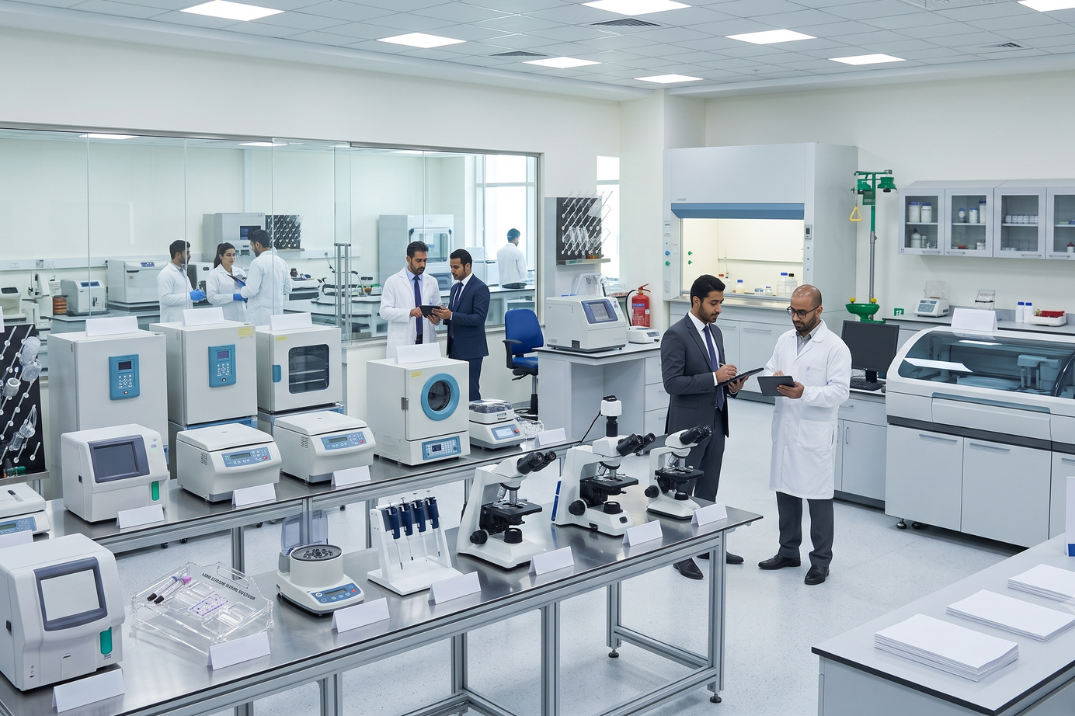
A lab rarely buys one machine and calls it done. Blood analyzers, microscopes, and PCR machines cover the diagnostic side, while biochemistry and hematology analyzers handle the bulk of routine testing volume. Beyond the headline instruments, a well-stocked supplier also carries centrifuges, incubators, autoclaves, water baths, fume hoods, precision weighing balances, and micropipettes, the smaller items a lab runs through constantly and can’t afford to wait weeks for. If a supplier can’t speak fluently about pH and conductivity meters or bottle top dispensers in the same breath as their flagship analyzers, that’s worth noting. Many buyers also pair equipment orders with laboratory glassware and plastic wares, since matching one supplier across categories tends to simplify procurement paperwork.
What Does After-Sales Support Actually Look Like?
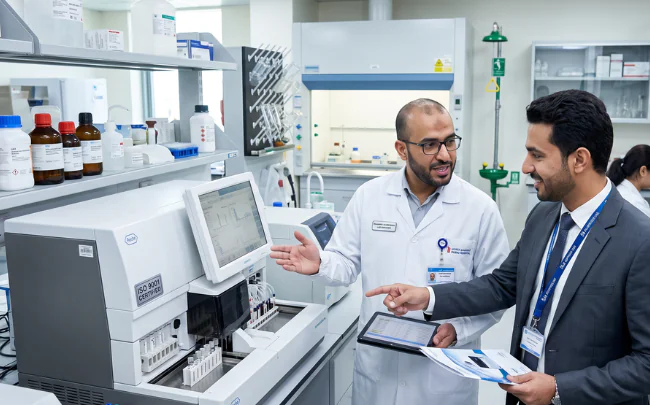
Equipment that isn’t calibrated and maintained properly drifts out of accuracy quietly, sometimes for months before anyone notices. This is where the real difference between suppliers shows up. Ask what happens after delivery. Is there a technician who sets up and calibrates the unit on site, and is there a service contract for ongoing maintenance, or is support limited to a phone number and a shipping label? Warranty terms matter, but so does whether technical staff are reachable when a hematology analyzer throws an error code mid-shift. Genuine expert support means someone who understands the instrument, not a call center reading from a script.
Can They Handle Custom Lab Setups, Not Just Standard Orders?
No two labs are laid out the same way, and equipment needs often change once a facility scales up or adds a new testing line. Suppliers who work through the design phase with you, rather than just fulfilling a checklist, tend to deliver setups that fit the actual space. This extends to safety infrastructure too. Eyewash stations, fire extinguishers, and storage cabinets need to match the layout and the chemicals stored on site, not a generic template. If your project also involves safety products for laboratories, it’s worth confirming the supplier covers that category alongside core instruments, so compliance doesn’t fall through the cracks between two vendors.
How Reliable Is Their Delivery Network Across the Emirates?
A hospital in Sharjah and a diagnostic center further along the coast don’t have the same logistics reality, even when they’re ordering from the same hospital laboratory equipment suppliers. Distribution networks that cover the wider UAE, not just the emirate where the supplier is headquartered, tend to fulfill orders faster when consumables run low mid-month. Ask about typical lead times for both large instruments and routine restocking, since a supplier who’s fast with one and slow with the other creates its own kind of bottleneck.
Final Thoughts
None of these five questions has a universal right answer. What matters is that a buyer gets clear, specific responses rather than vague reassurance. A supplier who can talk through certification, product depth, after-sales support, custom setup capability, and delivery reliability without hesitating has probably answered these questions before. Which of these five areas does your current procurement process weigh least, and is that the one worth revisiting first?
FAQ
Technically you could order from anywhere, but hospital and diagnostic equipment usually needs calibration, spare parts, and technical know-how that a general supplier doesn’t stock. Specialized suppliers who deal daily with blood analyzers and biochemistry instruments tend to catch issues before they become downtime.
Reputable suppliers usually offer paid service contracts or on-demand technical support even once the warranty ends. Ask about this before purchase, not after, since some suppliers go quiet the moment a warranty period closes.
If your lab has an unusual layout, limited floor space, or specific safety requirements, yes. A supplier willing to walk through the design phase with you before shipping anything usually saves rework later, especially around fume hoods, benches, and safety stations.
Look for ISO certification tied to the supplier’s own quality processes, not just the manufacturer’s brand name. Ask whether products have gone through international standard testing, and request documentation rather than taking a verbal assurance at face value.