
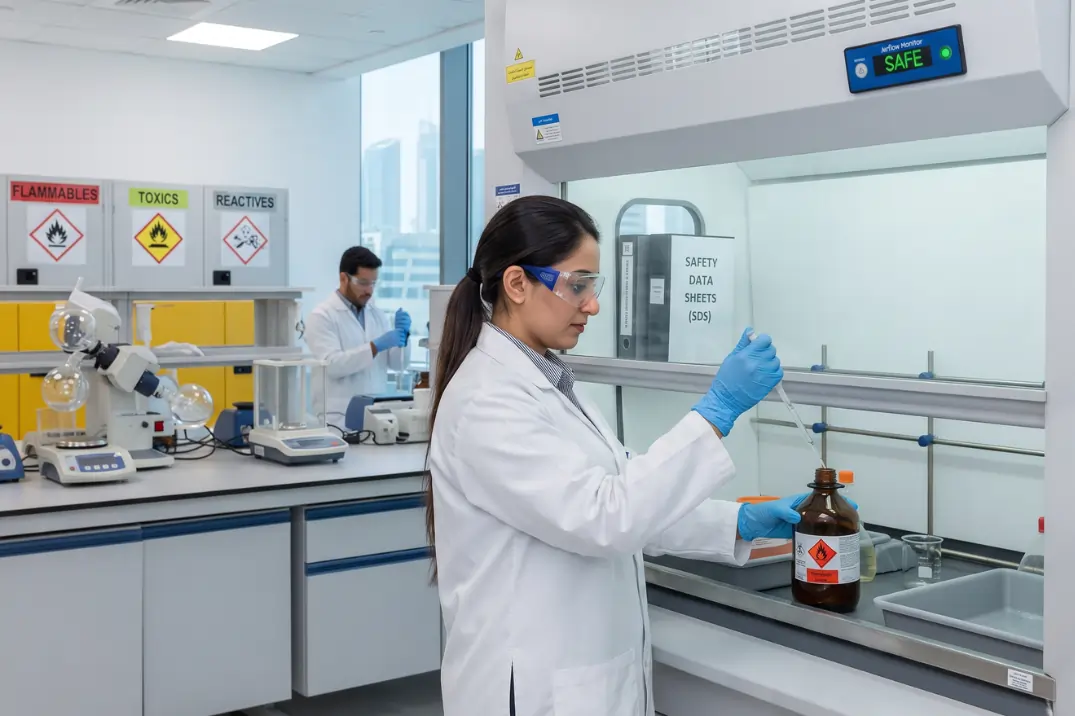
Chemical Hazards in Laboratory: Risks and Controls
Chemical hazards in laboratory rarely announce themselves. A cracked bottle cap, a mislabeled reagent, a fume hood running below its rated airflow, these things sit quietly until the moment they don’t. For labs across Sharjah, Dubai, and the wider UAE, spotting these risks early is what separates a routine day from an incident report.
What Are the Common Types of Chemical Hazards in Laboratory?
Most laboratory chemicals fall into a handful of hazard categories, and knowing which one you’re handling changes everything about how you store it, label it, and protect the people working near it. Concentrated acids and strong bases sit at the more obvious end of the risk scale. Skin contact, eye exposure, and even damage to metal fittings on equipment all happen fast enough that there’s rarely time to react once it starts.
Acetone and ethanol carry a different kind of danger. Their flash points sit low enough that a nearby heat source or a static spark from the wrong glove material can ignite vapor that’s barely visible in the air. Reactive chemicals are the ones that catch people off guard the most, since sodium metal or certain peroxides can sit stable for weeks and then respond violently the moment they touch water or an incompatible reagent, sometimes with enough force to split a container open.
Toxic and carcinogenic substances pose a different kind of risk. Exposure doesn’t always cause immediate symptoms, which is exactly why chemical safety data sheets exist. These documents list the physical properties, exposure limits, and first aid measures for every substance on your shelf, and they should be pulled up before a new chemical is opened, not after something goes wrong.
Corrosive and Reactive Substances: What Makes Them Dangerous
Corrosives don’t need heat or a spark to cause damage. A splash of sulfuric acid on bare skin starts reacting within seconds. What makes reactive chemicals trickier is timing. Sodium metal stored anywhere near moisture, or oxidizers kept next to organic solvents, can sit stable for months before a small trigger sets off a fast reaction. Segregated storage cabinets, rated for the specific chemical class, reduce this risk far more effectively than general shelving ever will. The Occupational Safety and Health Administration outlines laboratory-specific exposure standards that many facility managers use as a baseline even outside the United States, simply because the framework is thorough and well tested.
Toxic and Carcinogenic Exposure Risks
Chronic exposure is the quiet problem in most labs. A technician who inhales small amounts of a volatile solvent daily, over years, faces a different risk profile than someone who spills a beaker once. Respiratory protection, proper fume hood use, and rotating tasks to limit exposure time all matter here. Some reagents used in histology and pathology labs, formaldehyde being a common example, carry long-term health risks that aren’t obvious from a single day’s handling. This is where documented exposure limits and regular air quality checks earn their place in a lab’s standard operating procedure, rather than being treated as optional paperwork.
Engineering and Administrative Controchemical Hazards That Actually Work
Controls work best in layers. Engineering controls, fume hoods, sealed transfer systems, and proper ventilation come first because they remove the hazard from the breathing zone entirely rather than relying on a person remembering to put on a mask. Administrative controls follow: labeling protocols, chemical inventory limits, and scheduled training refreshers. Neither layer replaces the other. A lab with excellent fume hoods but no labeling discipline still has a hazard problem, just a slower one. Facilities that pair both layers with routine chemical storage audits tend to catch degrading containers and expired reagents before they become the source of an incident rather than after.
Personal Protective Equipment and Storage Practices
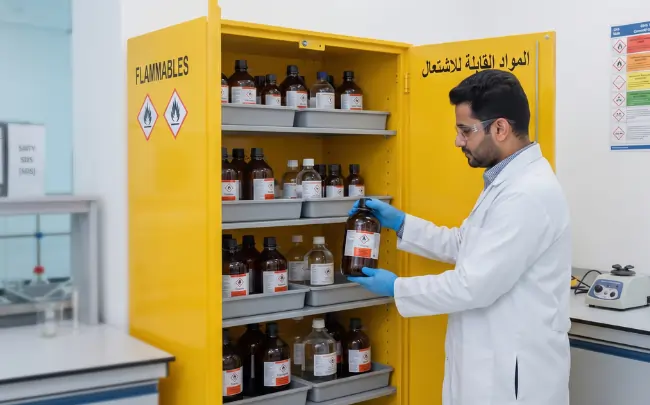
PPE is the last line of defense, not the first, but it still needs to fit the actual hazard rather than a generic checklist. Nitrile gloves protect against many solvents but degrade quickly against others. Safety goggles differ from splash shields in what they’re rated to stop. Coveralls and lab coats need to match the chemical class being handled, since a standard cotton coat offers little protection against a corrosive splash. Labs across the UAE sourcing safety products for laboratory personnel generally look for suppliers who stock a range wide enough to match each hazard class rather than a one-size option. Storage matters just as much. Flammables belong in rated cabinets away from ignition sources; acids and bases stay separated, and every container needs a current label, not a handwritten note from three years ago.
Final Thoughts
Chemical hazards in laboratory rarely give a second warning. Getting hazard identification right is the foundation everything else builds on, and a control measure only works if it matches the correct hazard class. That starts with reading the safety data sheet before a chemical enters the building, not after something goes wrong.
FAQ
Labs typically deal with four broad categories: corrosive, flammable, reactive, and toxic or carcinogenic substances. Each carries different storage and handling rules. Mixing categories on the same shelf is one of the most common mistakes in smaller facilities.
Check the safety data sheet first. It lists hazard classification, exposure limits, and required PPE for that specific substance. Skipping this step is how experienced staff still get caught off guard by reactive or toxic reagents.
Yes, when they’re functioning correctly and used properly. A fume hood pulls vapors away from the breathing zone before they accumulate in the room. Airflow needs regular testing, though, since a hood running below spec offers a false sense of protection.
At minimum, chemical splash goggles, nitrile or neoprene gloves rated for the specific acid or base, and a lab coat or apron resistant to that chemical class. Standard cotton coats won’t hold up against a corrosive splash.
Most facilities benefit from quarterly checks at minimum, with monthly spot checks for volatile or reactive substances. Degrading containers, expired labels, and improper segregation tend to surface fastest during these reviews rather than during daily use.